 Asian Junkie Asian pop. Without discretion.
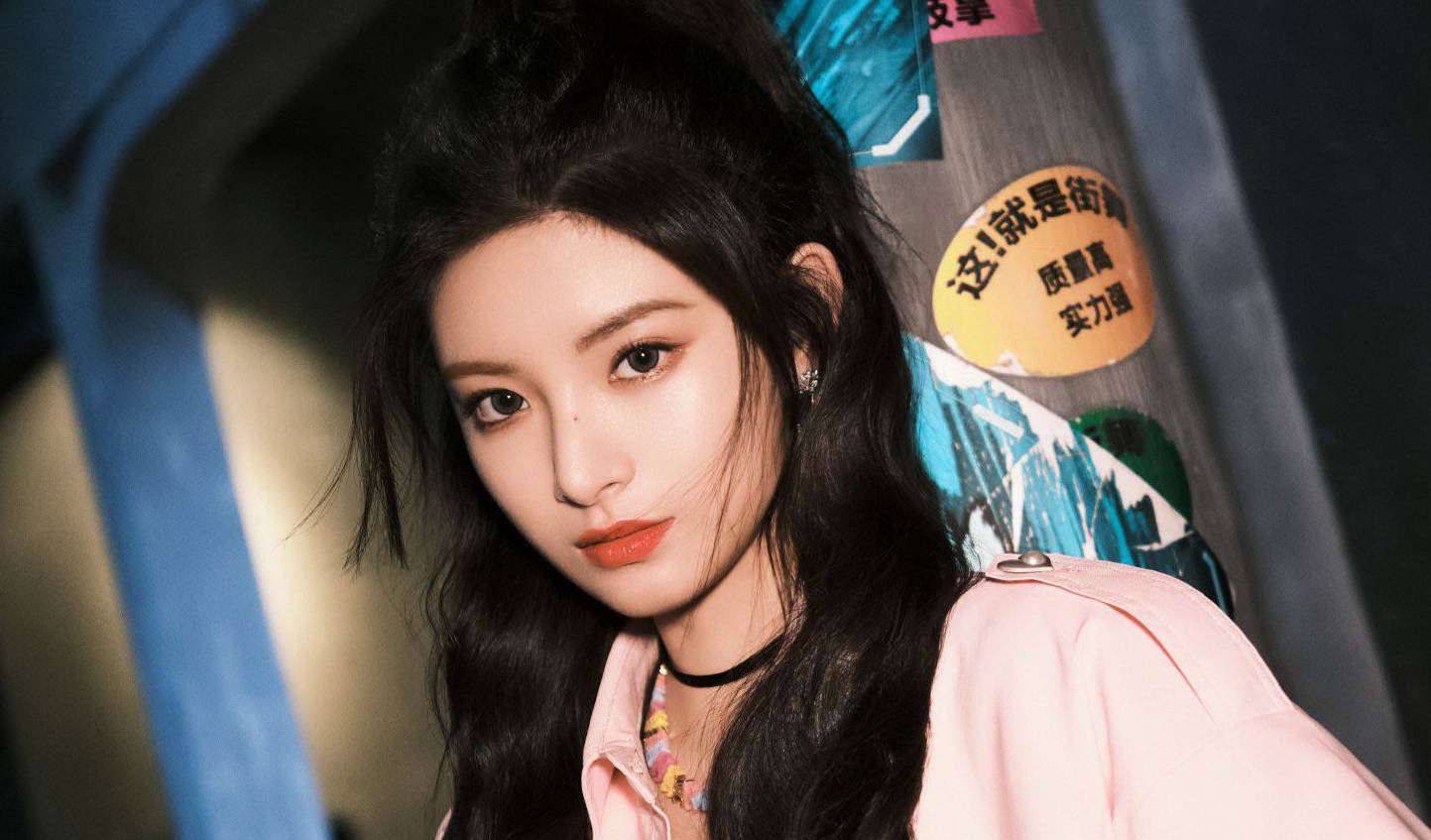
Former EVERGLOW member Wang Yiren is reportedly a part of a recent Chinese live-action short drama adaptation of The Left Ear novel, which shot to popularity as a film back in 2015. In itself that seems like a major coup for the idol, but the catch is that it’s an AI venture and she’s not doing any on-set acting of her own. Rather, she’s simply licensing her likeness to the studio, or at least Yuehua Entertainment is.
Perhaps making things even worse is the fact that the project has resorted to this due to a lack of interest from actors.
“In May of this year, when the original author, Rao Xueman, held a casting call for the AI-powered live-action short drama of ‘The Left Ear’ on Weibo, only four people participated. In contrast, her usual casting live streams on Xiaohongshu attract millions of viewers, meaning the AI-powered live stream only drew a quarter of that number.“
“The reason for taking ‘The Left Ear’ as an example is that the IP itself has high popularity and can attract the public’s attention to new works. The creators also want to use it to obtain image authorization from more well-known actors. Getting actors to agree to this is a problem faced by the entire industry.“
Rather than take that as a sign not to do an AI adaptation, they apparently just moved down the food chain, and Yuehua was apparently willing to give up Yiren’s likeness.
“In the end, Wang Yiren, an artist under Yuehua Entertainment, played the role of Xiao Erduo Li Er, and actor Jing Le played the role of Xu Yi.“
The producer of the AI adaptation seems to even understand why famous actors are unlikely to give up their IP, which is sort of almost a bizarro red flag to Yuehua that they apparently didn’t heed.
“Zhang Jing, producer of the AI live-action short drama ‘The Left Ear’ by Dawa Technology, analyzed: ‘An actor is an IP, and the most prominent asset of an IP is their face. They are bound to be cautious when facing this type of project.’ The caution comes from two aspects: first, the contract terms, which clearly define how long the image will be used, where it will be used, and whether it can be further developed; second, the risk of public opinion, ‘Even if we use it very cautiously and do not violate any regulations, if the audience’s emotions cannot accept it, there will still be public opinion problems.’“
Additionally, it’s not as if it’s just the actors who are hesitant to participate. The audience themselves haven’t responded to the push.
“In other words, AI dramas are everywhere, but audiences aren’t really buying into them.
In early June, the topic of ‘physiological aversion to AI faces’ became a trending topic, garnering over 52 million views. Public aversion to AI faces was concentrated at both ends. Some people felt that AI faces were all the same and particularly distracting; others feared that AI faces were too realistic, creating an ‘uncanny valley effect,’ where even seeing something doesn’t necessarily mean it’s real.
In the first quarter of 2026, the industry released approximately 128,000 micro-short dramas, of which around 122,000 were AI-generated, accounting for over 95 per cent. However, taking the 2026 Spring Festival season as an example, whilst the number of live-action dramas released was only one-fiftieth that of AI-generated dramas, their total viewership reached 25 times that of AI-generated dramas.“
No matter, the author of the source material used a common defense of the AI use as a matter of inevitability.
“‘There’s no point in dwelling on this. Everyone will accept it sooner or later. In the future, the movies we watch in theaters may all be AI-made.’ Rao Xueman believes that, similar to the early boycotts of online dramas, when AI production becomes mainstream, public acceptance is inevitable.“
Sigh.
I’ve mentioned previously how this seems to be the prevailing sentiment at least in East Asia, and the fact that many artists are the ones leading the charge provides a rather bleak outlook of the future landscape of the entertainment industry. China heading in this direction really feels like it’s only a matter of time before South Korea and Japan* start seeing similar things being proposed. And rather than really being about Yiren and Yuehua, it’s also bleak in the sense that it’s not hard to envision already powerless idols who operate at the whims of their companies will increasingly have their images sold out by their companies without really having a say in it.
*Hopefully the latter’s (at times insane adherence to) copyright/image laws are an obstacle.
