 Asian Junkie Asian pop. Without discretion.

There was already considerable controversy surrounding the Grammys creating a separate category for Asian pop music, especially among K-pop fans because it was widely viewed as something that was done to effectively quarantine the surge of K-pop nominations, or at least quiet the noise when they didn’t win one of the major categories by giving out a consolation prize of sorts.
BTS (and/or BLACKPINK) have always been the obvious choice to win in those categories, and BTS notably recently declared they wouldn’t be submitting to the award show this year, effectively boycotting.
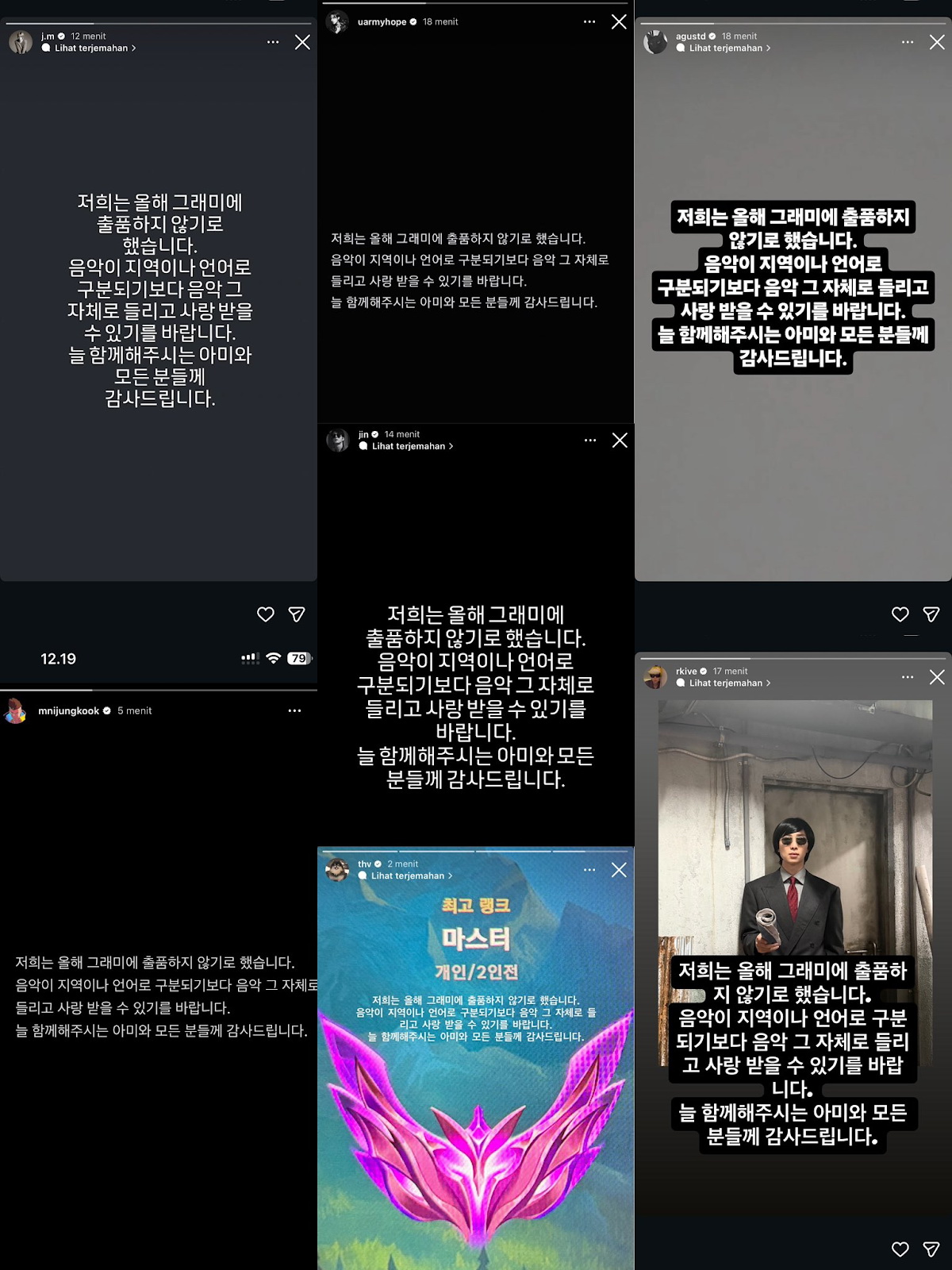
On Instagram, all seven members shared the same statement: “We have decided not to submit to the Grammys this year. I hope that music can be heard and loved for what it is, rather than being divided by region or language.“
Recording Academy CEO Harvey Mason Jr. released a statement in response, once again trying to justify the creation of the new category.
“I am saddened to hear that BTS has chosen not to participate in the Grammy Awards process this year, but as a music creator, I understand and respect their decision.
I do want to clarify something that seems to be getting lost in the conversation. The Asian Pop category was created to celebrate the depth, diversity and extraordinary growth of pop artistry coming out of Asia. The spirit of this new category is to shine a dedicated spotlight on these important artists. More categories mean more artists’ work is recognized. It’s never to divide, but to expand who is recognized by our 15,000 Grammy voters.
I also want to be very clear: submitting music in a genre category such as Asian Pop, or Jazz or Country does not exclude an artist from also submitting and being considered in the General Field categories, including Record of the Year, Album of the Year and Song of the Year. Those categories remain open to any eligible recording, regardless of genre. Recognition in a genre category and recognition in the General Field are not mutually exclusive. An artist can absolutely pursue both.
The Grammy organization is here to serve music and all the people who make it. As we continue to expand the reach, our membership and our awards, regardless of geography or language, I want to emphasize that we will continue to listen to the global music community and work to honor and celebrate all the artists whose music moves the world.“
The sentiment is nothing new, as it’s basically what they said both when they announced the category and when they floated an Asian Grammy Awards. In theory, yes, the thought process is sound and it would work toward the West acknowledging Asian music at large. In practice, given how we’ve seen similar play out over the years, it’ll be used in an exclusionary way for surging Asian acts, and they’re giving their best PR statement in hopes this won’t all start a bigger avalanche.
——
Look, I realize it’ll always be misunderstood by fandoms because they’re very single-minded, overly defensive, and hate nuance, but my position on these award shows has always been that they are industry circlejerks and should be deemphasized as tastemakers of sorts. So given that this decision only helps push that agenda of mine, I have no choice but to be completely appreciative for what BTS are doing here. The point has always been that fans (and other music industries, really) don’t need these people in the West (or anybody) to crown them in order to be good or relevant or whatever, and while it’s unfortunate that BTS have only seen that light years after trying to get the industry to do it, better late than never that the farce is seen through after the Recording Academy went a bit mask off on everybody. Honestly hope that more follow their lead.
